Megabasins: what legal regime?
Published on March 29, 2023


Rural law
Rural law
Rural law
By two interdepartmental prefectural decrees of 23/10/2017 and 20/07/2020, the prefects of Deux-Sèvres, Charente-Maritime and Vienne authorized the construction and operation of sixteen megabasins, or substitution reserves, for agricultural irrigation. Among them, the SEV 15 project planned in the municipality of SAINTE SOLINE, at the heart of the controversy.
But what is the legal regime for "megabasins"? Macfarlanes LLP takes stock.
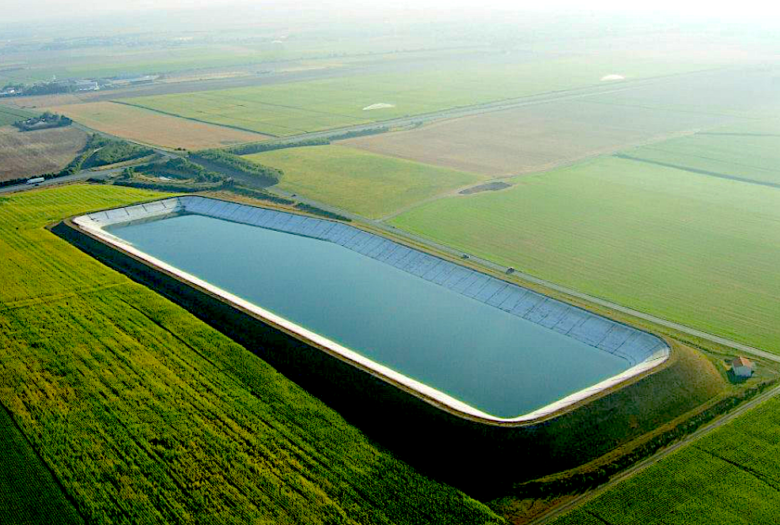
What is a substitution reserve?
A basin, or replacement reservoir, or megabasin for the largest ones, is an agricultural water storage structure that is filled during winter by pumping water from groundwater tables, or sometimes from watercourses.
From a technical point of view, it involves:
– An artificial structure;
– Having a limited volume;
– Allowing water storage and irrigating farmers adhering to the project to have a water right, particularly during drought periods.
How is the substitution reserve managed?
The law does not specify who must be the sponsor of these structures; in practice, it is often cooperatives or associations of local irrigating farmers.
The beneficiaries are the members who will obtain a water right during drought periods.
What are the legal foundations?
Since the law of January 3, 1992, the State has implemented collective water management. Article L211-1 of the Environmental Code provides that "The provisions of Chapters I to VII of this title aim at balanced and sustainable management of water resources."
According to this same code, balanced water management aims to reconcile the following requirements:
– "Public health, public sanitation, civil security, and the population's drinking water supply;
– Of the biological life of the receiving environment, and especially of fish fauna;
– Conservation and free flow of water and protection against floods;
– Agriculture, fisheries and marine cultures, freshwater fishing, industry, energy production, transport, tourism, site protection, leisure and water sports, as well as all other legally exercised human activities. (Article L211-1 of the Environmental Code).
Which regime?
Any extraction from an underground water table for the purpose of irrigating crops falls under the IOTA regime provided for in Articles L214-1 et seq. and R214-1 et seq. of the Environmental Code.
For permanent or temporary withdrawals from a borehole, well, or underground structure in an aquifer system by pumping, drainage, diversion, or any other process:
- Authorization regime for permanent or temporary withdrawals greater than or equal to 200,000 m3 / year.
- Prior declaration regime for permanent or temporary withdrawals exceeding 10,000 m3/year but less than 200,000 m3/year.
For structures allowing water abstraction from a watercourse, a body of water, or a canal fed by this watercourse:
- Authorization regime if their total maximum capacity exceeds 1,000 m3/h or 5% of the watercourse flow.
- Prior declaration regime if the capacity is between 400 and 1,000 m3/h or between 2 and 5% of the watercourse flow.
What compensation for farmers?
Mainly funded by the State, authorizations to create subsistence reserves come with special conditions for their operation (e.g., among the conditions set, farmers commit to reducing their irrigated corn production in favor of crops that require less water).
Can the authorizations be contested?
Possibility of lodging a non-contentious or hierarchical appeal with the administrative authority which may decide:
– To withdraw or cancel the contested decision;
– Not to grant the request.
Possibility of bringing an action for excess of power before the Administrative Court (Article R181-50 of the Environmental Code).
Universes
Rural law