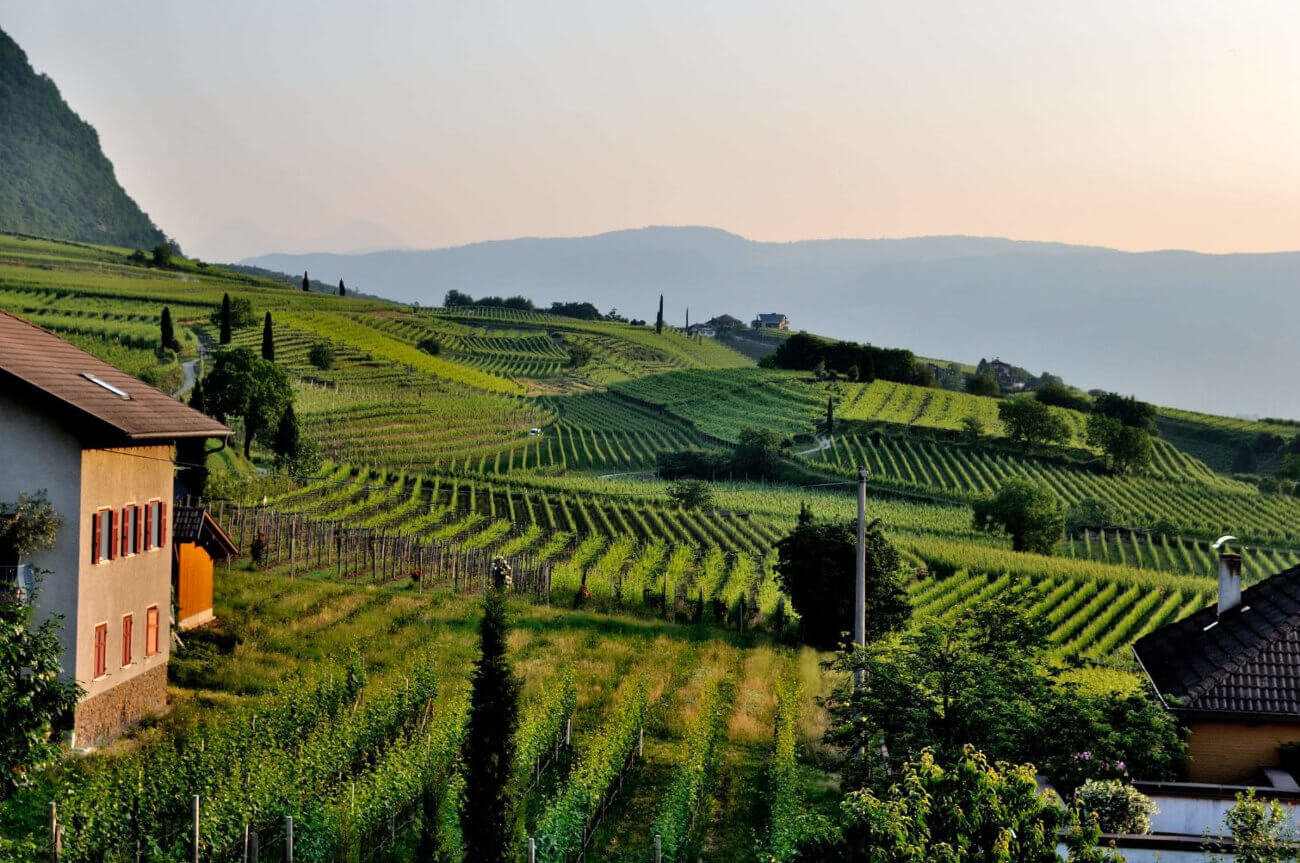
Winegrower, I discover that my plot is not in AOC, what should I do?
Published on July 23, 2024

Wine law
Wine law
Wine law
AOCs are a real tool for enhancing the value of wine production. Consequently, winegrowers are generally very attached to them. For several years, during revisions of specifications or controls, a problem has come to light, that of the plot. It is not uncommon that during these changes, some discover that certain of their plots are ultimately not included within the perimeter of the AOC.
What can a winegrower do when they discover that their plot is not within the AOC?
- What is the AOC area?
The AOC area is defined by a decree and then by specifications, in addition to a cartography.
Thus, all producers located within the defined perimeter and producing in compliance with the specifications may claim the appellation.
Thus, the decree designates the municipalities that may be covered by the perimeter of the AOC area.
The specifications set out “objective and rational” criteria that consist of both human factors and natural factors that shape the character and quality of the product.
It is the specification that specifies for each appellation the natural and human criteria allowing the perimeter to be delimited.
The mapping geographically translates the application of the criteria on the territory.
Designations are governed by European Union law, their purpose is to protect products and producers against usurpation, imitation, and other infringements.
The designation thus constitutes a guarantee of quality and authenticity of the products.
- Inspections and breaches: by whom and how?
To ensure that the operator benefiting from an AOC complies with the specifications of the appellation, checks may be carried out.
The certification or inspection body, approved by the INAO and chosen by the ODG, carries out controls according to an inspection plan developed with the ODG. This plan notably provides for the control methods (method, frequency, point) and the associated sanctions in the event of non-compliance with the specifications.
Thus, inspections can take various forms and be carried out on vineyard plots, production conditions, processing, or packaging.
Sanctions may include additional measures to assess the extent of the breaches found, the establishment of prior product checks, the suspension or withdrawal of the right to use the identification mark (AOC or others).
It is based on the report established by the inspection body that the director of INAO, after allowing the winegrowers to submit their observations, decides on the penalty measures for the breaches.
In the event that the control concludes that part of the plot is outside the perimeter of the AOC area, the operator is prohibited from using the appellation for part of his production from this plot; the sanction then consists of a "declassification" of the area outside the zone.

- How to regularize the situation?
Accept the downgrading and renounce declaring the wine produced as AOC.
The first option for the winegrower is to accept the downgrading and renounce the benefit of the appellation. This "simple" solution is never chosen, or only in extremely exceptional cases, by winegrowers because it means giving up a major element of value for their products.
Challenge the sanction and initiate one or more appeals.
The second option is to challenge the sanction by filing a so-called administrative appeal. This involves asking the authority that made the sanction decision, in this case the director of the INAO, to cancel it. This is an opportunity for the winegrower to explain to the director of the INAO why they disagree with the sanction measure(s).
If the director of the INAO fails to annul his decision, the winegrower may also bring a contentious appeal before the administrative court. This appeal must be filed within 2 months following the decision to reject the administrative appeal (whether implicit or explicit). It prevents the sanction from becoming final.
In the context of the contentious appeal, the illegality of the specifications and/or the mapping may be raised, in order to argue that the exclusion of all or part of the plot in question is illegal.
In parallel with this challenge, the winegrower can implement the third option, because even if the administrative judge annuls the penalty, this does not automatically lead to the reintegration of the plot into the AOC area.
Challenge the perimeter of the AOC area and request its modification to include your plot.
This third possibility consists, as a first step, of contesting the decision to declassify the plot or part of the plot, so that it does not become final.
At the same time, consideration should be given to referring the matter to the INAO for a request to implement the procedure for revising the specifications, in order to correct the mapping and include the plot or part of the plot located outside the zone.
There is a simplified revision procedure for the specifications, allowing for marginal limitation.
However, the quality of the applicants for revision is strictly regulated and requires proof of being an "interested group of producers" or, failing that, an "isolated producer". These two concepts derived from European regulations have been defined and clarified by French case law.
- The group of interested producers is associated in particular with professional organizations and producer organizations (e.g.: the defense syndicate of AOC Banyuls and AOC Collioure were recognized as groups of interested producers (CE, May 22, 2017, No. 397570) as well as the Union of producers and makers of Crémant de Bourgogne (CE, December 23, 2011, No. 337902)).
- The isolated producer is a status recognized on a rather exceptional basis and requires proving that they are the sole producer in the considered geographical area and that they produce a wine significantly different from the surrounding delimited areas (CE, March 8, 2023, n°446183).
To ensure the long-term (re)classification of the plot or part of the plot as AOC, it is therefore essential to implement or have the judge implement the revision procedure so that INAO permanently accepts the change.
In practice, engaging in a process to request a modification of the specifications is not easy, as it involves either creating a group of producers or mobilizing an existing one.
It is also necessary to work with the various stakeholders to bring the procedure to a successful conclusion, in particular winegrowing unions and syndicates and the INAO services.
Depending on the AOC area concerned, the availability or not of planting rights, the price of land, there is a real economic and political issue in this modification procedure.