Lawyers specialized in agricultural structures control
●Rural leases
●Control of structures
●SAFER
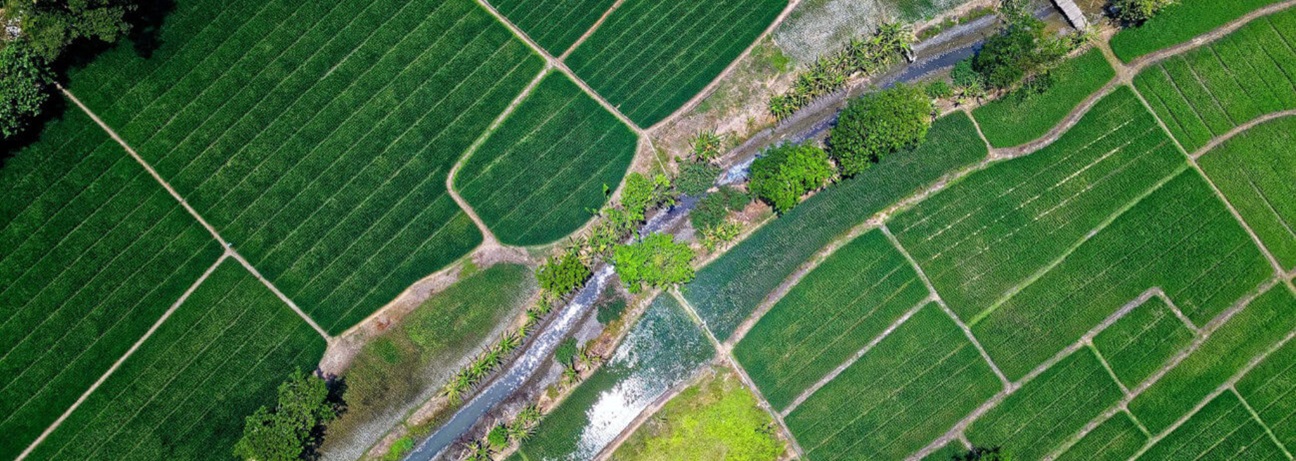
Are you planning to become a farmer? Are you a farmer and want to develop your farm? Do you want to expand your agricultural area or take over land? The support of our firm of lawyers specialized in structure control is essential to guarantee the compliance of your project.
We advise farm operators, whether individual or corporate, by helping them analyze their legal situation and structure their application for an operating permit. Our team also intervenes in case of refusal of authorization or formal notice, defending farmers before the competent authorities and administrative courts.
Why consult a lawyer specialized in agricultural structure control?
Control of structures is a regulatory mechanism in the agricultural world. It subjects certain agricultural land operations to prior authorization to operate, issued by the prefect after advice from the Departmental Commission for Agricultural Orientation (CDOA). This system aims to regulate access to agricultural land, promote the establishment of young farmers, and maintain a dynamic and diversified agriculture in the territory.
Which operations are subject to an operating permit?
Many agricultural land transactions may be subject to structural control and require prior authorization to operate.
Among the main ones, we can cite:
- the acquisition or exchange of agricultural land;
- the installation of a farm tenant;
- the provision of land to agricultural companies;
- the formation of agricultural companies.
The acquisition of agricultural plots can be carried out by natural persons (individual farmers, partners of agricultural companies) or legal entities (agricultural companies, agricultural land groups).
The conclusion of a rural lease is subject to an operating permit in certain cases, particularly when the leased area exceeds a certain threshold set regionally in the regional master plan for agricultural holdings (SDREA). The provision of land to agricultural companies or the contribution of land to an agricultural company may also require an operating permit, as it may lead to a change in the structure of the agricultural holding.
Exchanges of agricultural land allow two farmers to swap plots of land. They may be regulated by an operating permit if they involve large areas or significantly modify the structure of the farms concerned.
The creation of an agricultural company allows several partners to be grouped together and the farming of agricultural land to be pooled. It may be conditional on an operating authorization if it leads to a concentration of land exceeding the threshold set by the SDREA or if the operating partners do not meet the conditions of professional capacity or experience.
What are the exceptions to the operating authorization?
While the control of structures is a general principle, certain agricultural land transactions may be exempt from prior operating authorization.
These exceptions are provided for by law and aim to take into account particular situations, such as:
- successions;
- inter vivos donations;
- transfers between spouses;
- land development operations.
The heirs of a farmer can take over the family farm without having to apply for an operating permit. A farmer can transfer his agricultural land to his children or to other family members, relatives or in-laws up to the 3rd degree, without having to obtain an operating permit, and a simple prior declaration is sufficient. Transfers between spouses facilitate transfers of agricultural land between spouses, particularly in the event of divorce or separation of property.
Operations carried out by local authorities or public inter-municipal cooperation establishments (EPCI) may also be exempt from operating authorization as part of their land planning missions. The CDOA and the prefect take into account various criteria, defined by law, to ensure that the agricultural land operation complies with the objectives of the structure control system
Support from our lawyers specialized in structure control
Our firm of lawyers specialized in structural control advises and supports individual and corporate farmers in their installation or expansion projects. We carry out a precise analysis of their legal situation to determine whether they are subject to the prior operating authorization regime. We also assist you in preparing and filing your application for an operating permit.
What is the role of the CDOA in the control of structures?
The Departmental Commission for Agricultural Orientation (CDOA) is a key player in the control of agricultural structures. Placed under the prefect, this advisory body plays a major role in examining applications for operating permits and contributes to guiding agricultural policy at the departmental level.
What is the composition of the CDOA?
The CDOA is distinguished by its varied composition, bringing together representatives from different categories of actors in the agricultural and rural world.
It notably includes:
- representatives of agricultural professions (presidents of chambers of agriculture, representatives of agricultural unions, representatives of producer groups, etc.);
- representatives of local authorities (departmental councilors, mayors, representatives of EPCIs, etc.);
- consumer representatives (consumer associations, representatives of environmental protection organizations, etc.);
- representatives of environmental protection associations (associations approved for environmental protection, representatives of regional nature parks, etc.);
- qualified individuals, appointed for their expertise in the agricultural, environmental, or economic field.
This diverse composition allows the CDOA to take into account the various issues related to the control of structures, whether economic, social or environmental.
What are the missions of the CDOA?
The main mission of the CDOA is to give an opinion on applications for operating authorization submitted to it by the prefect in cases of competing applications. This opinion is issued after a thorough review of the application file, during which the CDOA assesses the project's compliance with the objectives of the structures control.
To issue its opinion, the CDOA bases itself on the criteria defined by law, such as:
- the area of the farm;
- the number of partners;
- the age of the operator;
- the presence of young farmers;
- the economic viability of the project;
- respect for the environment;
The CDOA may also take into account other elements, such as issues related to landscape preservation, biodiversity protection, or the fight against climate change. The opinion of the CDOA is advisory. This means that the prefect is not legally bound to follow the opinion of the CDOA. However, this opinion is an essential element of the operating authorization procedure.
Indeed, the prefect must justify their decision, whether it complies with the CDOA opinion or not. If they deviate from the CDOA opinion, they must explain the reasons that led them to a different decision. The CDOA opinion thus helps inform the prefect about the issues related to each application for an operating permit and ensures more transparent decision-making.
Nos avocats spécialisés en contrôle des structures agricoles vous préparent à votre passage devant la CDOA. Nous vous aidons à anticiper les questions et à présenter votre projet de manière claire et convaincante. Notre équipe d’avocats en droit rural vous assiste lors de votre audition devant la CDOA et nous vous conseillons sur la stratégie à adopter.
Appeal in case of refusal of operating permit: Contact our lawyers specialized in structural control
A refusal of an operating permit can jeopardize your agricultural project. Operators may also be subject to orders to cease their activity under penalty of financial sanctions. If your application for an operating permit is rejected, you have several avenues of appeal to contest this decision and assert your rights.
Graceful appeal: an amicable approach to the prefect
The administrative appeal consists of asking the prefect to reconsider their decision and grant you the operating permit. You have a period of two months from the notification of the refusal decision to file this administrative appeal. The prefect then has a period of two months to respond to your administrative appeal. The absence of a response within this period constitutes an implicit rejection of your appeal.
Hierarchical appeal: a request to the Minister of Agriculture
If your administrative appeal is rejected or if you have not received a response within two months, you have the possibility to initiate a hierarchical appeal to the Minister of Agriculture. This appeal aims to ask the minister to rule on the prefect's decision and to grant you the operating authorization.
You have a two-month deadline from the explicit or implicit rejection of your gracieux appeal to file this appeal. The Minister of Agriculture then has four months to respond to your hierarchical appeal. The absence of a response within this period constitutes an implicit rejection of your appeal.
Contentious appeal: an action before the administrative court
In the event of explicit or implicit rejection of your hierarchical appeal, you can refer the matter to the competent administrative court through a contentious appeal within two months. The objective here is to ask the administrative court to annul the prefect's decision and grant you the operating authorization.
The administrative judge examines your request, assesses the conformity of the prefect's decision, particularly with regard to the criteria set by the control of structures, and renders a decision, which can then be challenged before the Administrative Court of Appeal, and then possibly before the Council of State. Our firm of lawyers specialized in agricultural structure control advises you on the most appropriate appeal route for your situation. We also assist you in drafting your appeal.
Our legal firm represents you before the prefect, the preliminary appeal commission, and the competent administrative courts. In case of refusal of an operating permit, order to file an application, or order to cease operations, contact Macfarlanes LLP to defend your interests.