Avocat spécialisé en aménagement foncier agricole
●Rural leases
●Control of structures
●SAFER
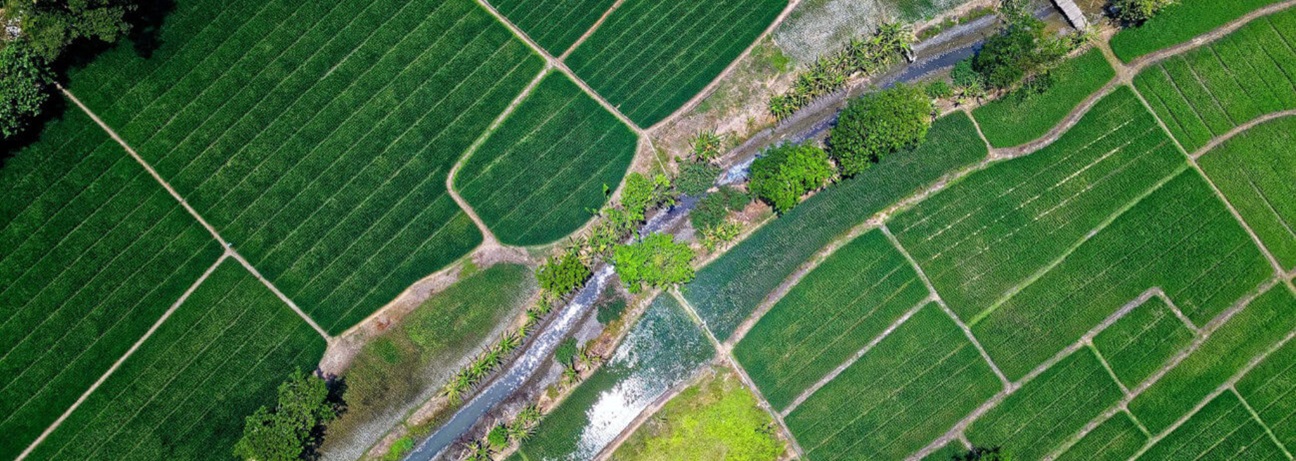
Are you a farmer or landowner looking to optimize the organization of your agricultural land? Are you facing a disagreement over the boundaries of your plots after a land consolidation? Then seek the support of our firm of lawyers specialized in rural land management. Formerly referred to as land consolidation, agricultural land management is now governed by Article L. 121-1 of the Rural Code.
This operation aims to consolidate fragmented plots and bring them closer to agricultural holdings to optimize their use. By using our services, we will ensure that your agricultural assets located within the development perimeter are assessed accurately and fairly. Our expert team in rural law is also committed to ensuring that the plots allocated to you in return have a value equivalent to those consolidated.
Concretely, what is agricultural land development? Our rural law lawyers tell you more.
Unlike its predecessor "land consolidation", agricultural land development is now resolutely part of a pro-environmental logic.
Her objectives now include:
- the preservation of ecosystems;
- the protection of landscapes;
- and the promotion of sustainable agriculture.
As for land consolidation, it was mainly aimed at productivist agriculture to meet the food needs of post-war France. Concretely, land management is a procedure for redrawing and redistributing cadastral parcels at the municipal or inter-municipal level.
The aim is to consolidate and restructure land properties, mainly agricultural, which were previously fragmented and scattered. This operation involves a complete overhaul of land ownership, with precise surveys and boundary marking of all the plots concerned, whether agricultural, forestry, or even located in villages and town centers.
Since Law No. 2005-157 of February 23, 2005 on the development of rural territories, the implementation of agricultural land consolidation falls under the jurisdiction of the Departmental Council. It launches the call for tenders and acts as the project owner throughout the process. However, the initiative for this procedure often comes from the municipalities, which request the Departmental Council to initiate the process.
Dans la plupart des cas, la demande initiale provient des exploitants agricoles eux-mêmes. La commune joue alors un rôle de relais en transmettant cette demande au Conseil Départemental. Prenez contact avec notre cabinet d’avocats spécialisés en aménagement foncier rural pour garantir la restitution équitable de vos biens agricoles à l’issue de la procédure.
What is the purpose of a rural land consolidation?
Based on the principles of sustainable development, agricultural land development aims primarily to improve farmers' operating conditions. It seeks to modernize their production tools by reducing travel, facilitating access to plots and optimizing their management time.
This procedure also allows:
- preserve ecological corridors to promote biodiversity;
- prevent the risk of forest fires;
- protect and manage water resources;
- preserve or rebuild protected areas for fauna and flora;
- enhance the natural and built heritage of the municipality.
Land consolidation also offers the opportunity to redesign and connect hiking or mountain biking trails, while opening up hard-to-reach plots. Similarly, it puts an end to conflicts related to common property or property boundaries. Thanks to a completely remodeled cadastre, measured to the centimeter and demarcated on all sides, each owner receives a clear and precise title deed.
Thus, questions like “Who owns the village oven?” find a definitive answer, which eases tensions and strengthens community cohesion. The procedure is often lengthy, potentially spanning 5 to 6 years, due to its complexity and the many actors involved. It requires rigorous coordination between landowners, farmers, local authorities, and environmental bodies.
Our firm of lawyers specialized in agricultural land development advises you on aspects related to co-ownerships, easements, as well as property rights and rights of way. We also inform you about the rules applicable to rural leases, the rights and obligations of owners and operators. We also advise you on urban planning regulations, environmental protection, and landscape preservation.
Development study: assistance from our lawyers specialized in agricultural land development
A development study (formerly called "pre-study") is launched upstream to establish a complete diagnosis of the territory. This diagnosis covers land, agricultural, and environmental aspects, in order to assess the relevance and feasibility of the project. The development study is based on several key steps:
- field meetings with local stakeholders (farmers, landowners, elected officials, etc.);
- public inquiries to gather residents' opinions and needs;
- a diagnosis of agricultural holdings to assess their situation and expectations.
This helps inform the agricultural aspect: are farmers in favor of the development? What land exchanges are possible? Is the number of farms sufficient to justify the operation? What related works will be necessary? These are all essential questions to determine whether the agricultural land development meets a real need.
Le bureau d’études retenu pour cette étude rend compte régulièrement de ses avancées à une Commission communale ou intercommunale d’aménagement foncier (CCAF/CIAF). Cette phase d’étude s’étale généralement sur deux ans. Vers la fin de l’étude, un plan périmètre est élaboré pour définir les limites futures de l’aménagement foncier. Le Conseil Départemental prend en compte l’avis consultatif de la CCAF pour décider de la nécessité ou non de lancer l’aménagement foncier.
This decision is based on the study's conclusions and feedback from local stakeholders. Our specialist agricultural land development lawyers assist you in preparing documents, communicating with residents and managing any objections. We advise you on the choice of companies and monitoring of works. We are able to coordinate the various stakeholders: surveyors, agricultural experts, companies.
Lawyer specialized in agricultural land development to assist you in the operational phase of the procedure
The Departmental Council gives the green light to launch the rural land consolidation. This operational phase involves carrying out several simultaneous studies and actions: environmental studies, topographical surveys, etc. On the agricultural side, a key step is to classify land and forests according to their value and potential. This classification will serve as a basis for developing the new land registry.
The preliminary project: plan establishment, negotiations, exchanges
Once the lands are classified, a preliminary plan is established. The plots are represented by colors corresponding to their value. This plan serves as a basis for designing the preliminary draft of the new parcel division. Then comes the phase of negotiations and exchanges between owners and operators.
Discussions cover:
- access to plots;
- the development of paths;
- hydraulic management (drainage, flood prevention);
- the preservation or reconstruction of protected areas for fauna and flora;
- related work to be planned.
Individual meetings in the field are organized to understand everyone's expectations. These exchanges take place over time and are the subject of regular presentations before the CCAF, which validates progress. The CCAF is composed of local farmers, landowners, representatives of the Chamber of Agriculture, the Departmental Council, local elected officials, the land registry, as well as environmental associations.
It is validated by the President of the Departmental Council. It also examines complaints from owners made during the public inquiry. In the event of persistent disagreement, the general interest prevails. If an owner contests the decision, they may refer the matter to the Departmental Land Development Commission (CDAF). As a last resort, it is possible to bring the case before the administrative court.
As specialized lawyers in land development, we support you in negotiating with all stakeholders. We draft legal documents (exchanges, sales, leases) while ensuring the protection of your interests. We defend your rights before administrative courts in the event of disputes, appeals, or litigation.
The final project: opinion of the MRAE, signing of the closure order, transfer of ownership
Once all claims related to the preliminary project are resolved, the parcel redivision plan and related works are validated by the CCAF. The project is then submitted to the Regional Environmental Authority Mission (MRAE) for an opinion. The MRAE examines in detail the impact study and the planned works, paying particular attention to environmental issues.
For example, it is no longer possible to remove a hedge or embankment without justifying that it does not harm biodiversity. Environmental interest is now as important as agricultural interest. Once the opinion of the MRAE has been obtained, a public inquiry is launched. This allows each citizen to consult the project, express their views, and, if necessary, file claims before the CCAF, then the CDAF, and finally the administrative court as a last resort.
The opinion of the MRAE plays a decisive role in the Prefect's decision, who must issue a closing order to finalize the operation. Combined with that of the President of the Departmental Council, this prefectural order marks the end of the project phase. Once the closing order is signed, the transfer of ownership is carried out in collaboration with the Land Publicity Service (SPF). The old property titles are replaced by new documents, in accordance with the validated exchanges.
The cadastre is completely revised: new sections and parcel numbers are assigned. Even parcels that were not exchanged are affected if they are within the development perimeter. Our team of lawyers specialized in land development assists you in all stages of the procedure, ensuring that your interests are preserved.